Nausicaa
Nausicaa, daughter of King Alcinous and Queen Arete of the Phaeacians, is the young woman whose intervention on the shore of Scheria transforms Odysseus from a naked, shipwrecked castaway into a guest on the verge of returning to Ithaca. She is the poem's most vivid embodiment of perfect, spontaneous hospitality—the xenia that the suitors have so flagrantly violated—and her brief encounter with Odysseus carries the weight of a potential marriage that never materializes, marking her as a figure of unrealized possibility within the epic's relentless drive toward Odysseus's homecoming.
Identity and Introduction
Nausicaa is introduced as a girl "as lovely as a goddess" , sleeping in a beautifully decorated bedroom in the palace of Alcinous. The goddess Athena, acting to further Odysseus's return, visits Nausicaa in a dream, taking the form of her friend, the daughter of the sea captain Dymas. Athena chides the princess for her carelessness with her laundry, hinting that her marriage is imminent and that she must prepare fine clothes for herself and her attendants. The goddess's words are a strategic fiction: they prompt Nausicaa to go to the river to wash, where she will encounter Odysseus. Nausicaa's response to the dream is immediate and practical; at dawn she goes to her parents and, without mentioning the dream's true subject, asks her father for a wagon to carry the laundry, using the needs of her father and brothers as a pretext. Her father, Alcinous, sees through her modesty and grants her request with affectionate indulgence, saying, "You shall have the mules, my love, and whatever else you have a mind for" .
The Encounter on the Shore
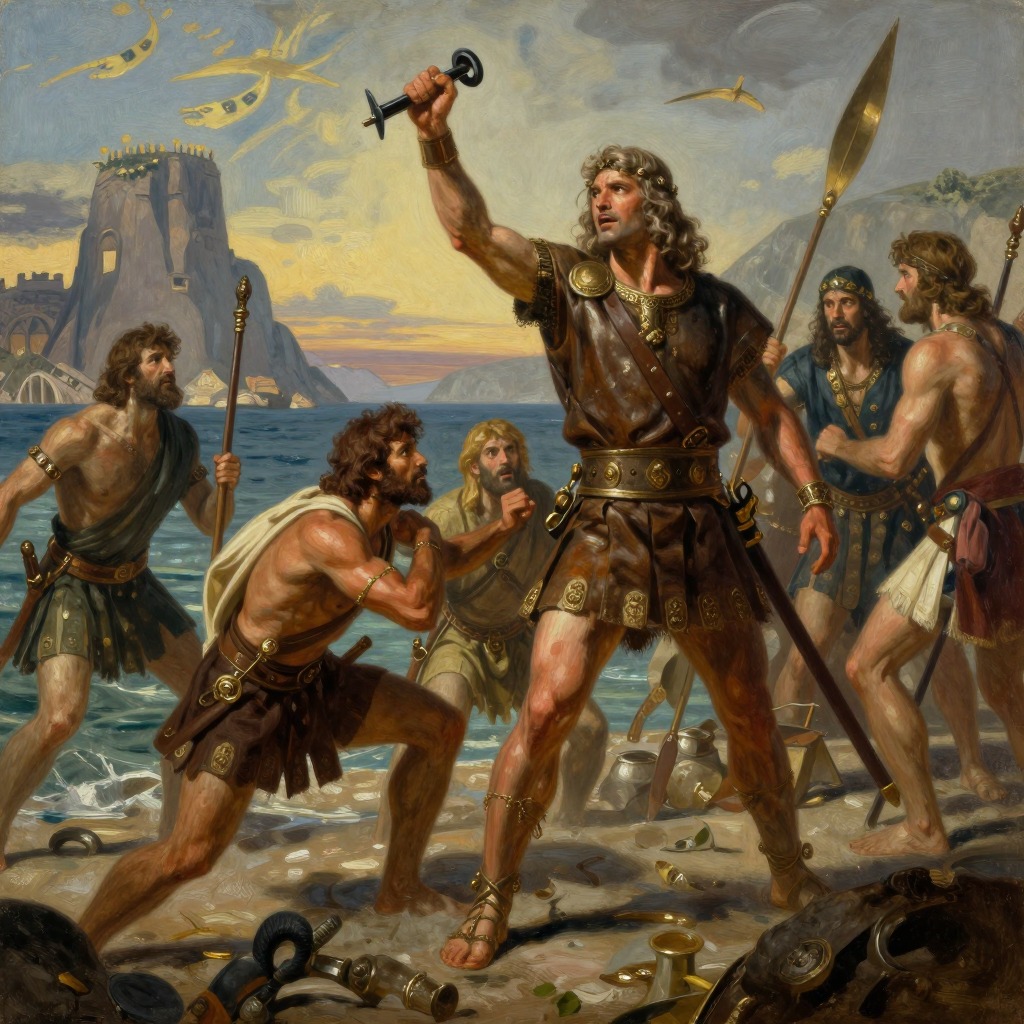
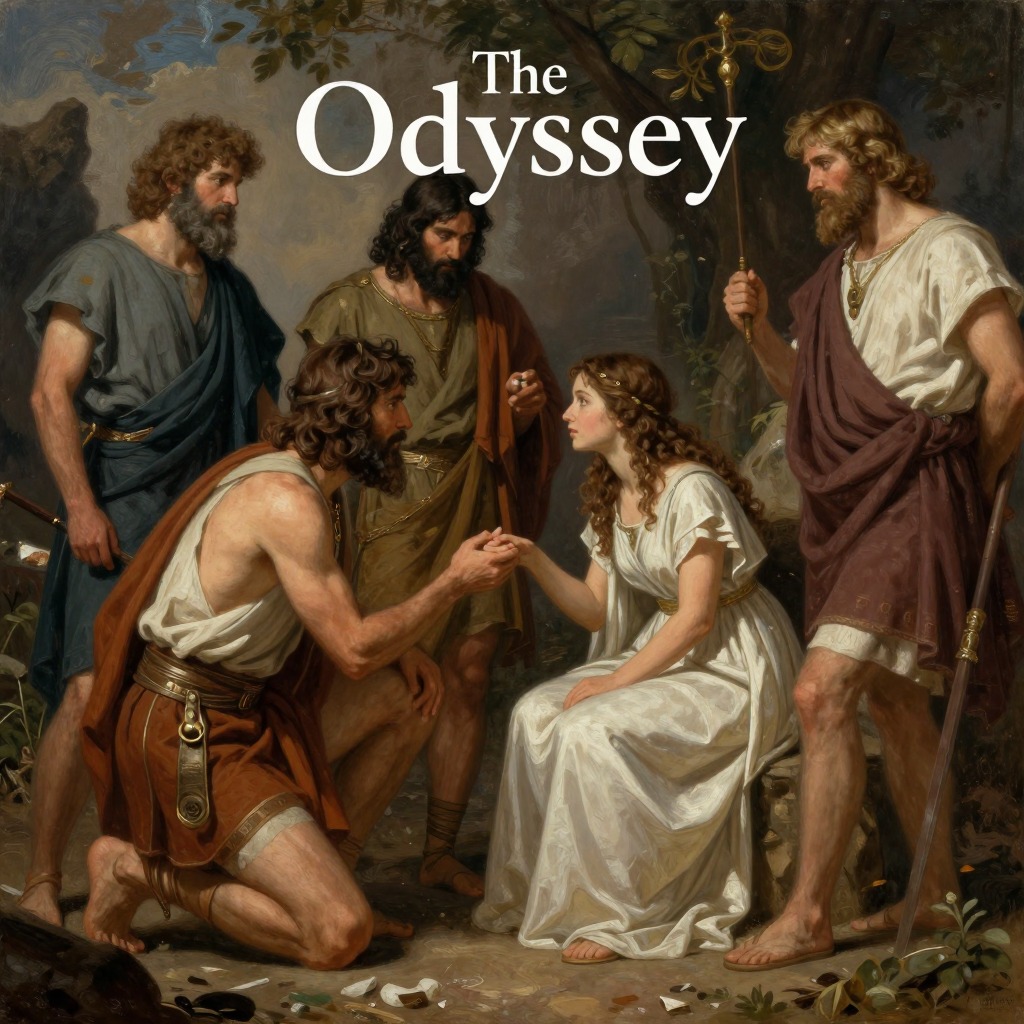
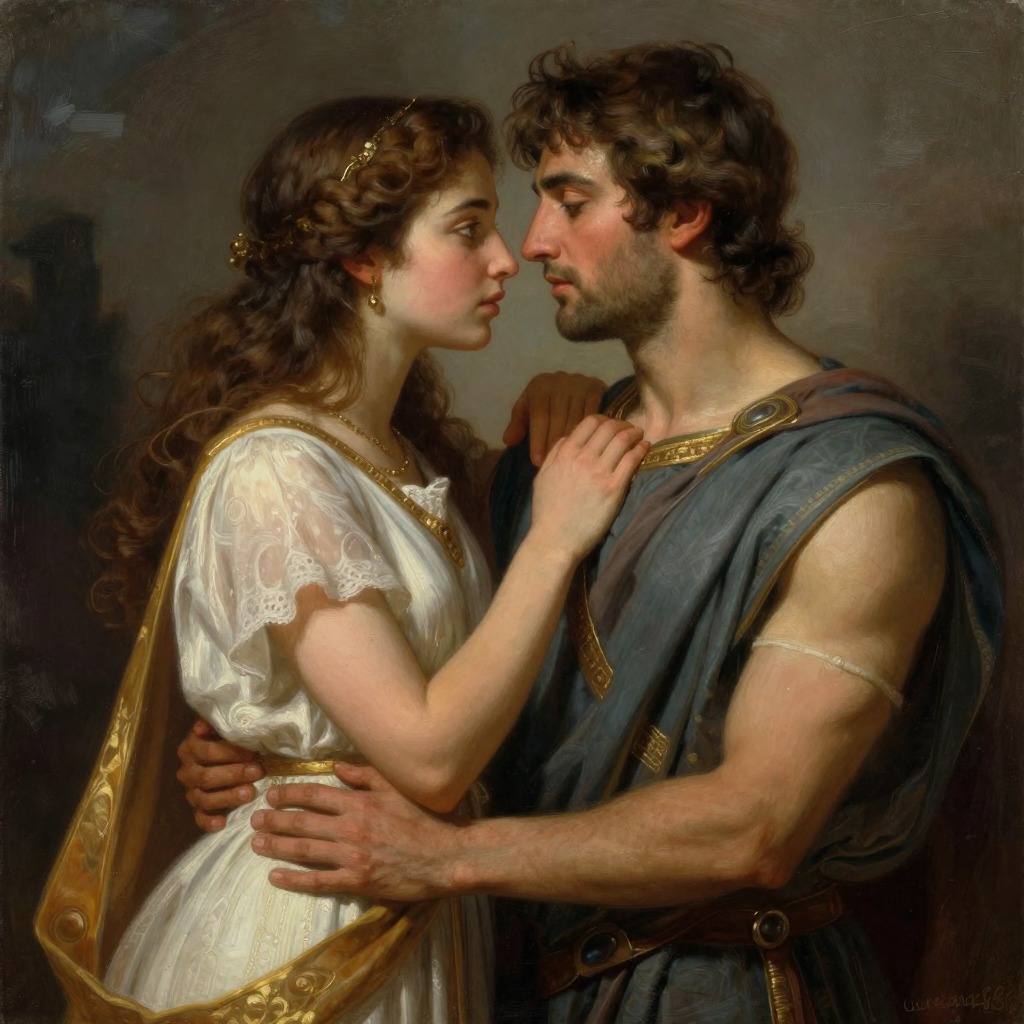
At the washing cisterns by the river, Nausicaa and her maids wash the clothes, anoint themselves with oil, and play ball after their meal. When Odysseus, awakened by their shouts, emerges from his bed of leaves beneath two olive shoots, he is a terrifying sight—"like some lion of the wilderness" , naked and caked with brine. The maids flee in panic, but Nausicaa stands her ground, her courage fortified by Athena. Odysseus, debating whether to clasp her knees as a suppliant or to keep his distance, chooses the latter and delivers a carefully crafted speech that compares her to the goddess Artemis and to a young palm tree he once saw at Delos. He praises her beauty and begs for clothing and guidance to the town. Nausicaa's response is poised and generous: she recognizes him as a sensible man favored by Zeus, assures him he will lack nothing, and identifies herself as the daughter of Alcinous. She then instructs her maids to give him food, drink, and oil for washing, and to provide him with a shirt and cloak. When Odysseus, bathed and anointed by Athena's grace, emerges looking "quite young and handsome" , Nausicaa gazes at him with admiration and confides to her maids that she wishes her future husband might be just such a man—if only he would stay in Scheria.
Guidance and the Fear of Gossip
Nausicaa's practical wisdom extends beyond her initial kindness. She devises a careful plan to protect her own reputation as she leads Odysseus toward the city. She instructs him to follow the wagon at a distance until they reach the town, then to wait by a grove of poplars dedicated to Athena until she and her maids have had time to reach her father's house. Her reasoning reveals a sharp awareness of social scrutiny: she fears the gossip of the "ill-natured" townspeople, who might speculate that she is bringing home a husband from a foreign ship . She tells Odysseus to bypass her father and go directly to her mother, Queen Arete, and clasp her knees, for if he can gain the queen's favor, he may hope to see his home again. This advice proves decisive: when Odysseus later enters the palace and supplicates Arete, it is she who first questions him and recognizes the clothes he wears as her own handiwork, setting the stage for the Phaeacians' decision to grant him passage to Ithaca.
The Farewell and Narrative Significance
Nausicaa's final appearance in the poem is a brief, poignant farewell. As Odysseus prepares to leave the palace after the Phaeacian games and feast, she stands by a bearing-post of the cloister and addresses him directly: "Farewell stranger, do not forget me when you are safe at home again, for it is to me first that you owe a ransom for having saved your life" . Odysseus responds with a promise to pray to her as a goddess all his days. The exchange is formal yet charged with the memory of what might have been. Alcinous had earlier offered Odysseus his daughter's hand in marriage, along with a house and estate, but Odysseus had gently declined, his heart set on Ithaca. Nausicaa thus remains a figure of the road not taken—a potential bride whose kingdom offers peace, wealth, and eternal youth, but whose allure cannot compete with the pull of home and Penelope. In the larger architecture of the poem, she functions as the last and most human of the helpers who ease Odysseus's passage from the world of myth and monsters back into the world of human society, and her role underscores the epic's central theme: that even the most perfect hospitality cannot substitute for the flawed, beloved reality of one's own country.